Skip to content
Logo: Slovenian Institute of Hop Research and brewing

How Hops Respond to Environmental Conditions: New Measurement and Research Capabilities at IHPS

Through the PRIRAST project, we have acquired LI-COR equipment for plant physiological measurements. This portable system measures photosynthesis and related parameters under natural or controlled conditions. It enables non-invasive, real-time measurements of key physiological traits reflecting photosynthetic efficiency, plant water balance, stomatal behaviour and overall plant vitality. The system directly quantifies how efficiently plants use light, CO₂ and water, and how they respond to environmental conditions and stress factors, including soil water deficits and high daytime temperatures.

During the 2026 growing season, we gained experience in operating the equipment and conducted regular measurements on hop leaves in the hop garden at our project partner, Ribič Hop Farm. The data will allow us to compare two hop varieties under evaluation with two standard varieties, providing valuable information for the IHPS breeding programme. Understanding how different varieties respond to heat, drought and other environmental stresses is essential for selecting breeding lines with greater resilience to conditions that are becoming increasingly frequent under climate change.

The #PRIRAST project is funded under intervention IRP38 – Consortia of Knowledge Institutions Supporting the Transition to Green, Digital and Climate-Neutral Agriculture, as part of Slovenia’s Common Agricultural Policy Strategic Plan 2023–2027.
Infographics: hop do hops cope with heatwaves


We attended the professional conference “Current Developments in Organic Farming”

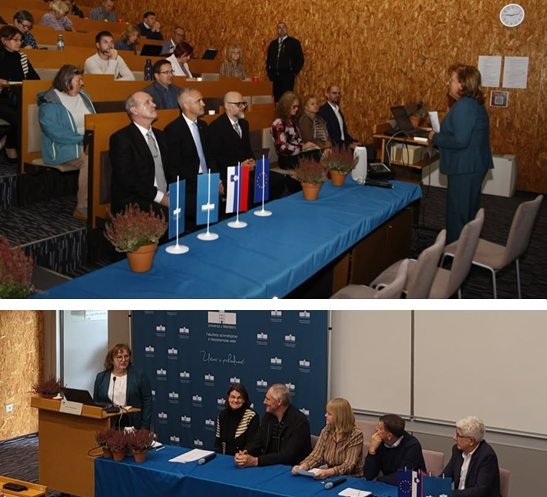
The conference, organised by the Faculty of Agriculture and Life Sciences, opened with welcoming addresses by Minister of Agriculture Janez Cigler Kralj, the Rector of the University of Maribor, Prof. Dr Dean Korošak, and the conference’s lead organiser, Prof. Dr Martina Bavec. The Minister emphasised the importance of strengthening domestic organic production and increasing the share of organic food served in kindergartens, schools and hospitals. In 2025, Slovenia had 4,033 agricultural holdings registered in the organic control system, covering approximately 58,900 hectares, or around 13% of the country’s utilised agricultural area. Priorities include simplifying administrative procedures, modernising farms, transferring knowledge into practice and creating opportunities for young people. Cooperation between farmers, agricultural professionals and researchers is essential to support the sector’s development, the long-term viability of farming and a more resilient food system.

During the morning panel discussion, colleagues from the Slovenian Institute of Hop Research and Brewing (IHPS) presented how #CLIMAGROW supports organic farming.

CLIMAGROW is a cross-sectoral knowledge consortium dedicated to adapting crop production to climate change. It brings together different agricultural sectors and production systems and addresses topics relevant to organic farming, including maintaining soil fertility, managing water efficiently, integrating catch crops and undersown crops, understanding the soil microbiome and improving plant resilience.

By upgrading the soil physics and irrigation laboratories at the Slovenian Institute of Hop Research and Brewing and the Biotechnical Faculty of the University of Ljubljana, we are strengthening our capacity to study soil water retention and plant-available water. We investigate how these are affected by soil structure and compaction, tillage, organic matter, catch crops and undersown crops. Soil moisture measurements, weather data and knowledge of crop water requirements will inform decisions on when to irrigate and how much water to apply. For farms without irrigation, we are investigating measures to improve soil water retention and adapt crop rotations and crop selection.

Field trials assess suitable species and mixtures of catch crops and undersown crops, their sowing dates and their integration into crop rotations. We also study interactions between plants and soil microorganisms and their role in plant responses to drought. A rainout shelter is planned at the Ptuj Infrastructure Centre to enable controlled studies of plant responses to water shortages and comparisons of crop species, varieties and production practices under drought conditions.

In plant protection, we are developing airborne pathogen spore monitoring and assessing the quality of plant protection product application. For organic farming, this work is particularly relevant to timely interventions and more targeted use of permitted products.

Practices and solutions are tested and demonstrated at experimental and demonstration sites and on demonstration farms across 15 locations. Knowledge transfer takes place through field demonstrations, training, cooperation with agricultural advisers and public services, and exchanges of experience between farmers. The aim is to establish which measures are effective, on which soils and under which growing conditions, and translate these findings into practical recommendations for farms.


Dekorativna slika


Sustainable Method for Potato Haulm Desiccation

Participants learned about the Burger Farm’s experience in testing new methods of potato haulm destruction and were introduced to both chemical and non-chemical approaches to the desiccation of ware potatoes. Properly performed desiccation is an important agronomic measure, as it affects tuber maturation, skin quality, harvesting efficiency and the reduction of risks associated with tuber damage and infection.

The event brought together potato growers, researchers and experts, who presented practical experience and results obtained within the #PRIRAST and #CLIMAGROW operations and the targeted research project Development of a Sustainable Method for Potato Haulm Desiccation.

A significant part of the event was devoted to adapting potato production to climate change. The effects of drought and heat stress on potato growth and yield were presented, together with options for improving water-use efficiency and the importance of timely and professionally managed irrigation. The discussion also covered measures that growers can adopt to reduce the risks posed by increasingly frequent extreme weather events.

Technological innovations presented at PotatoEurope – PotatoEurope 2026, relating to modern approaches to potato production, crop management and harvesting, were also highlighted.

The event concluded with a practical demonstration of non-chemical potato haulm destruction using the HOAF KB 1.5 Twin Burner. The machine’s operation and its potential applications in practice were presented by Dr Peter Dolničar and Tomaž Poje, MSc, from the Agricultural Institute of Slovenia.

Events of this kind facilitate the direct transfer of research results and new technologies into agricultural practice while strengthening cooperation among research institutions, advisory services and growers. By jointly developing effective and environmentally responsible solutions, we contribute to more sustainable, resilient and competitive potato production in Slovenia.

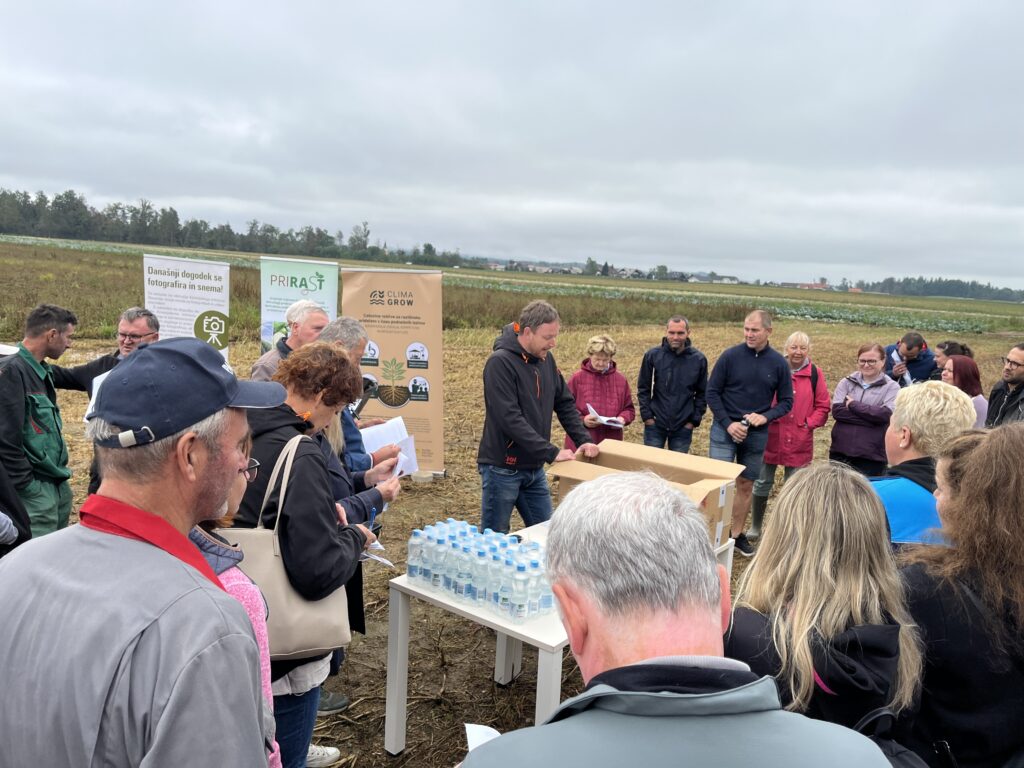
Participants gathering on the field around lecturer.


Practical Demonstrations of Modern Technologies in Hop Production

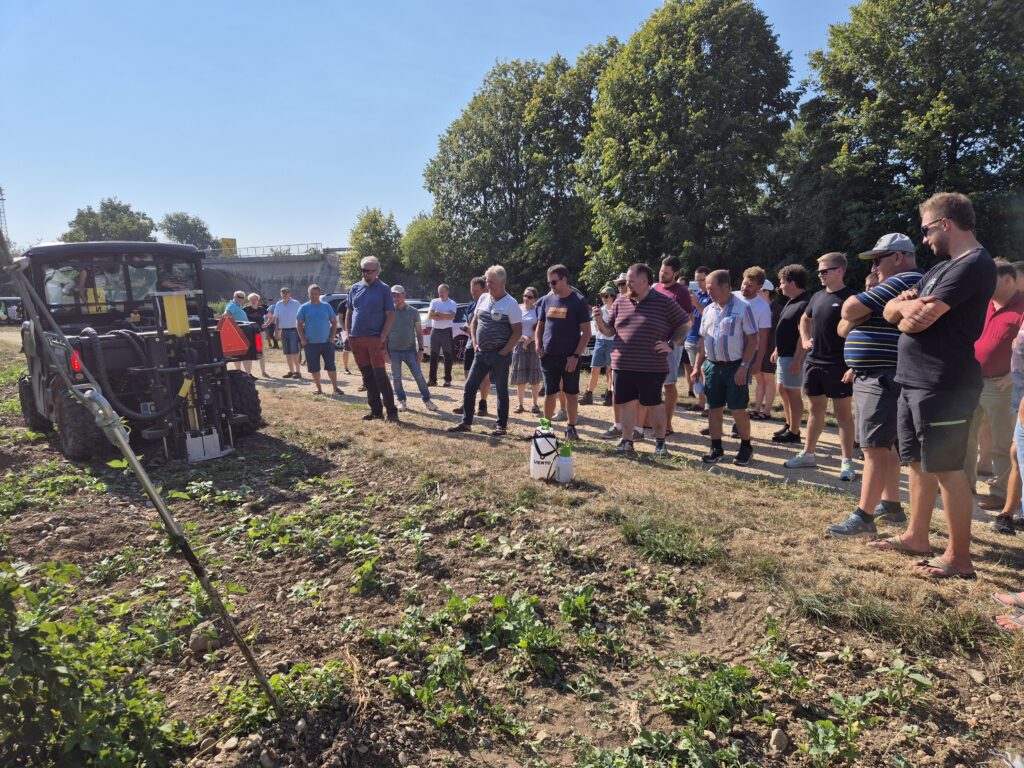
Today, we conducted practical demonstrations at the hop farm Ribič, where participants were introduced to modern methods for monitoring soil and plant status, as well as advanced technologies supporting precision hop production:

  • Soil compaction assessment – Within the #CLIMAGROW operational project, we demonstrated methods for measuring soil compaction and highlighted its importance for root development, water retention, and adapting hop production to climate change.
  • Physiological measurements in hops – Is the hop under stress? – As part of the #PRIRAST operational project, we demonstrated physiological measurements that enable the assessment of heat and drought stress in hop plants, providing a better understanding of plant responses to changing environmental conditions.
  • Automated soil sampling and ground-penetrating radar (GPR) soil mapping – Within the #Robot4Plants operational project, we presented the use of an automated soil sampler and ground-penetrating radar for high-resolution soil mapping, supporting precision management of hop fields.

We would like to thank all hop growers and other participants for the excellent attendance, great interest, and many engaging questions. It is encouraging to see the growing interest in modern technologies, which represent an important step towards more sustainable, efficient, and data-driven hop production.

These operational projects are implemented under Intervention #IRP38 of the Common Agricultural Policy Strategic Plan 2023–2027.
 

Participants on the field are watching de machine

IHPS colleagues receive prestigious IHGC awards

At the 60th Congress of the International Hop Growers’ Convention (IHGC), held from 26 to 29 July 2026 in Ingolstadt, Bavaria, Germany, Slovenia was represented by delegates from the Slovenian Institute of Hop Research and Brewing (IHPS), the Slovenian Hop Growers’ Association, hop merchants, and hop growers. During the IHGC General Assembly, distinguished individuals were honoured for their outstanding achievements and long-standing contributions to the hop industry.

This year, Slovenia received four prestigious honours. Upon the nomination of the Slovenian Hop Growers’ Association, hop growers Slavko Šalej and Franc Gajšek were awarded the Order of the Hop, First Class (Knight). On the nomination of the IHGC International Scientific and Technical Commission, the same distinction was awarded to Dr Sebastjan Radišek. Upon the nomination of the IHGC Executive Board, Prof. Dr Martin Pavlovič received the Order of the Hop, Second Class (Officer).

We warmly congratulate all the recipients on these well-deserved honours.

Martin Pavlovič in Sebastjan Radišek s priznanjem v roki

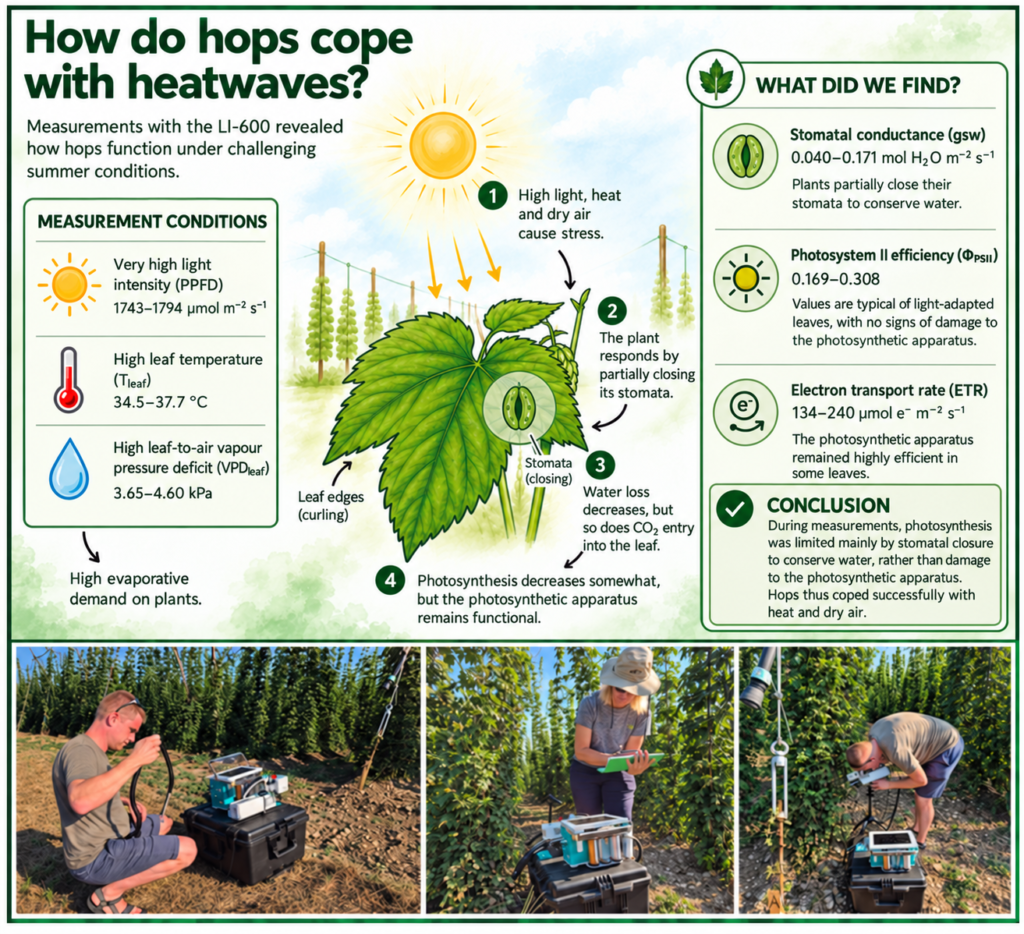
How Does Hop Cope with Heat Waves?

 At IHPS, we monitored how hop plants respond to high temperatures and intense solar radiation during hot summer conditions. Measurements showed that the plants were exposed to considerable environmental stress, with leaf temperatures exceeding 35 °C and very high levels of solar radiation.

Under these conditions, hop plants responded by partially closing their stomata, thereby reducing water loss. As a consequence, photosynthetic activity also decreased to some extent.

This indicates that, even under challenging environmental conditions, hop plants maintain their ability to use available light efficiently and can rapidly resume normal growth once conditions improve.

This research helps us better understand the impacts of climate change on hop production and supports the development of more effective irrigation strategies and cultivation practices to adapt hop production to increasingly frequent periods of heat and drought.

More information about the LI-COR equipment used for these measurements is available on the LI-COR website under LI-600 Porometer/Fluorometer for Broad Leaves.

More about the project: IRP 38: CLIMAGROW – Inštitut za hmeljarstvo in pivovarstvo Slovenije

#IRP38 #CLIMAGROW The project is supported by funding from the European Union and is implemented within the Strategic Plan of the Common Agricultural Policy 2023–2027 for Slovenia.

Infografic. Content available in appendent text below the picture.

Content of Infographic for screen readers, generated wit AI


SUBSCRIBE TO OUR NEWSLETTER
© 2016 - 2026 Inštitut za hmeljarstvo in pivovarstvo Slovenije all rights reserved. | Cookies | Accessibility Statement | Site map